


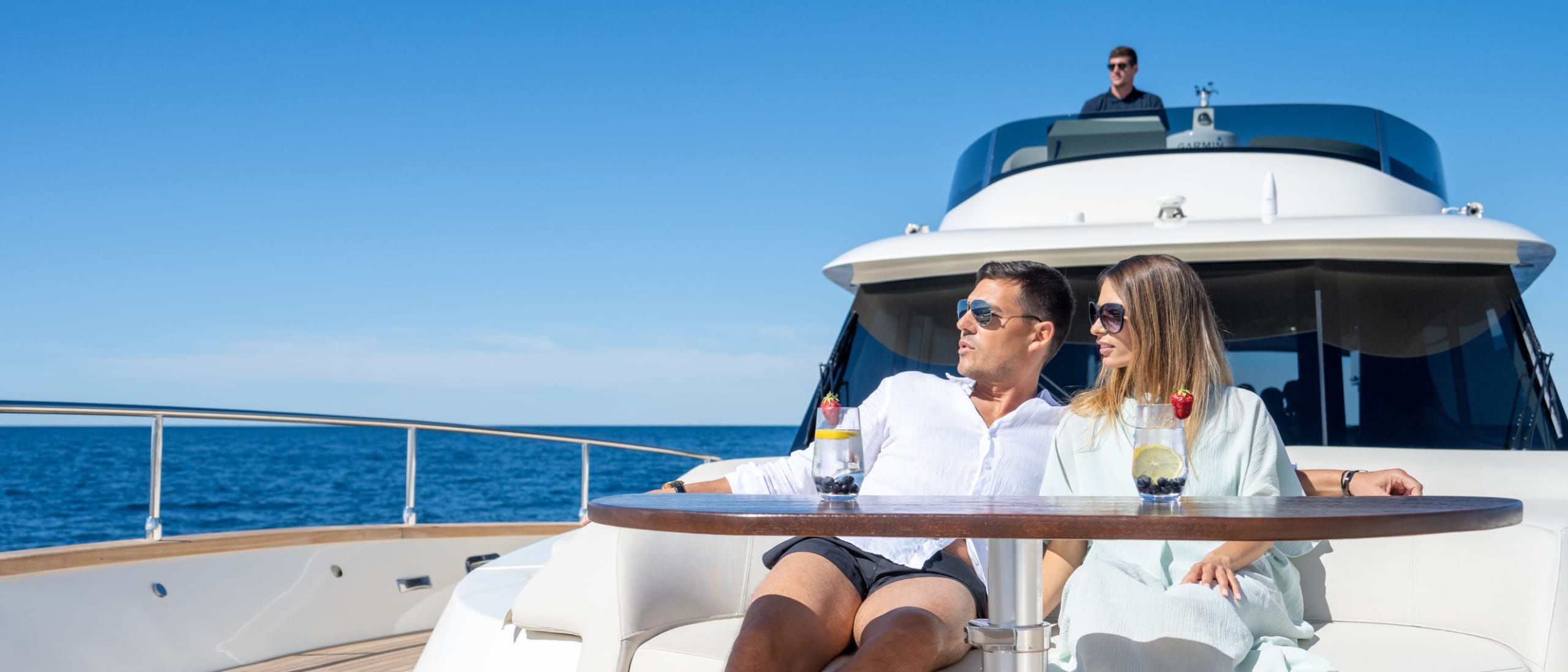


“It was a huge success – the boat was great and our skipper, Antonis, was brilliant – we could not have asked for more. Thank you for all your help in organising everything.”
The Pontine Islands
Charter
Length7 Days, 129Nm
Typical Weather
Air 24–30°C | Sea 22–26°C | Wind 10–20 kts (W–SW)
Nearest Airport
Naples International Airport (NAP), Rome Fiumicino (FCO)
Starting
PortProcida
Make an enquiryWhy choose H&K?
Procida to Ischia, 5Nm
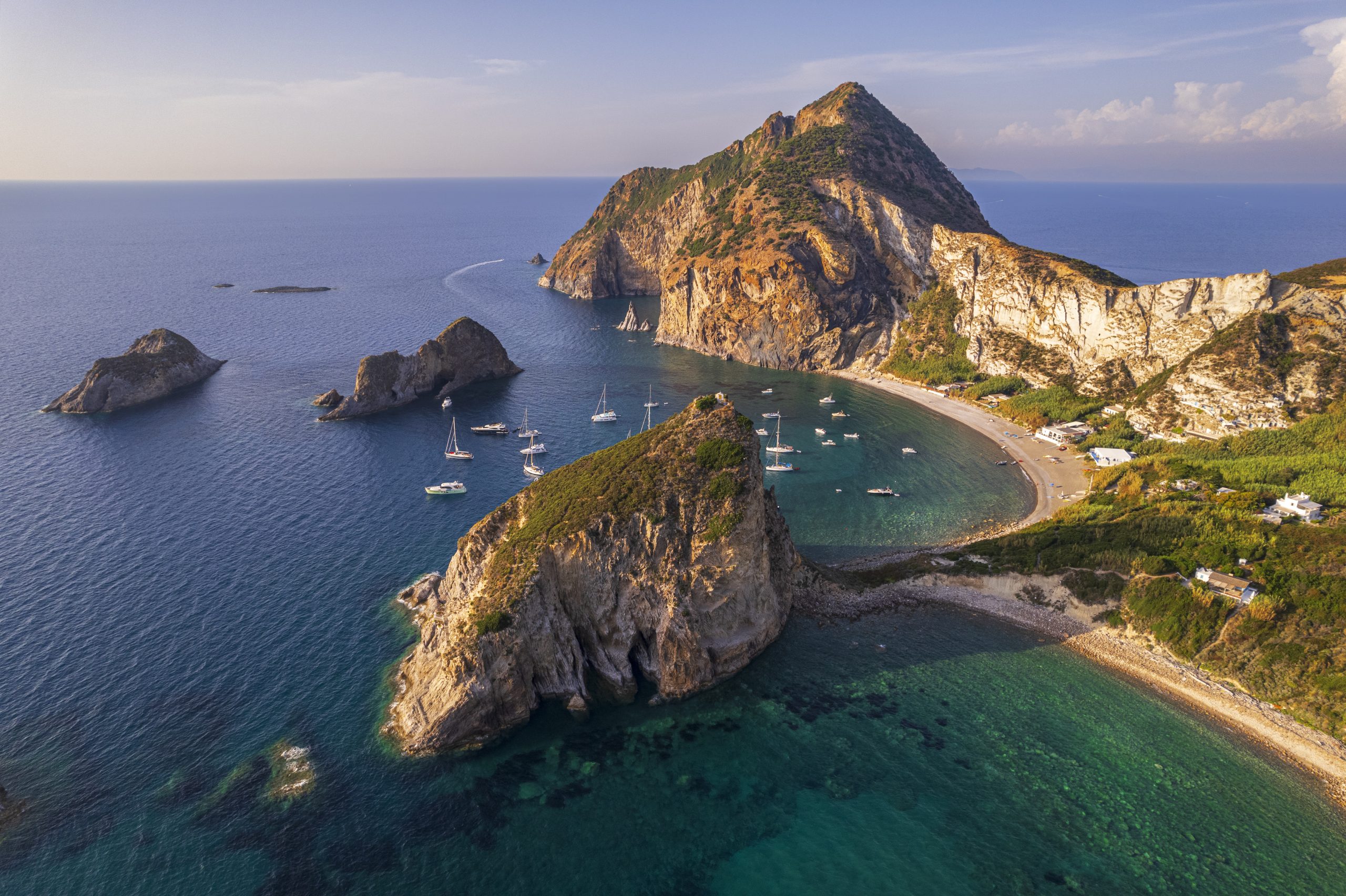
The Pontine Islands sit quietly in the Tyrrhenian Sea, shaped by volcanic forces and centuries of history. These waters have long drawn sailors and storytellers alike, from Homer’s Odysseus to Roman emperors who carved harbours directly into the rock. Today, they remain refreshingly untamed, best explored at an unhurried sailing pace.
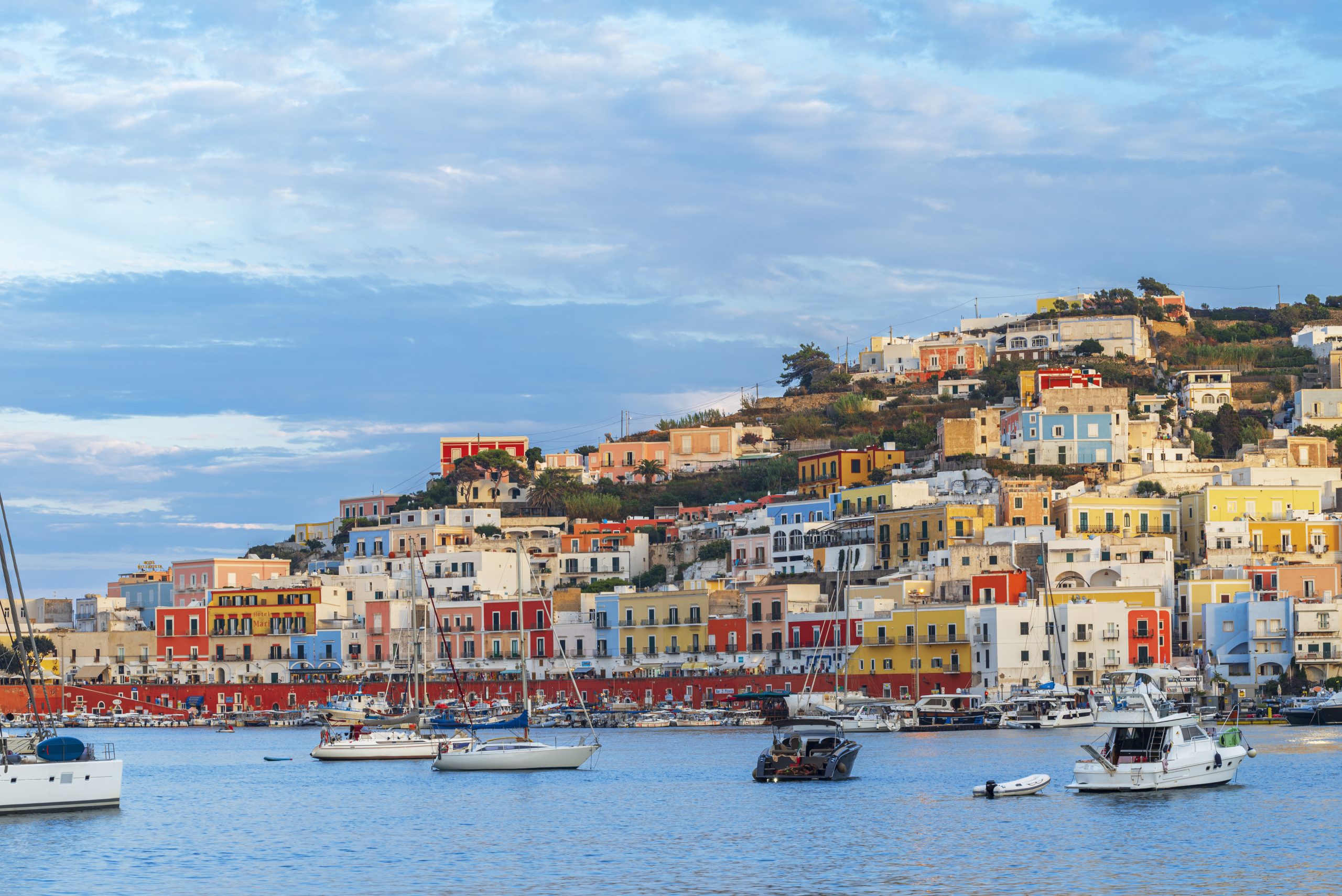
Begin in Procida, collecting the yacht in the afternoon. Procida is a fitting departure point, a working island of pastel houses and narrow streets that still feels grounded and unpolished. A short sail brings you to Ischia in time for sunset beneath the walls of the Aragonese Castle, one of the most striking arrivals in the Bay of Naples. Rising straight from the sea, the castle has guarded the island since the 5th century BC.
Anchor or berth nearby and go ashore for supper. Ischia’s food scene is rich and relaxed, with simple seafood, rabbit cooked Ischian-style and local white wines. An evening walk around the harbour as the light fades quietly sets the tone for the week ahead.

Ischia to Sant’Angelo, 7Nm
Spend the morning exploring Ischia. Options include a walk up towards the castle for views across the bay, a visit to one of the island’s thermal gardens, or a quiet coffee in Ischia Ponte.
In the afternoon, sail around the southern side of the island towards Sant’Angelo, one of the prettiest villages in the region. Formerly a fishing settlement, it is now pedestrianised and calm, with pastel houses clustered around a narrow isthmus.
Anchor off Sant’Angelo and swim in the warm, clear water. The volcanic nature of the island means the sea can feel noticeably warmer here. Sunset is best enjoyed on board, followed by a relaxed supper aboard after evening swims, with the village lights reflected in the water.
Sant’Angelo to Ventotene, 22Nm
Leave early for the longer open-sea passage to Ventotene. This stretch of water marks the transition from the Bay of Naples into the Pontine archipelago proper. Swimming stops en route are a highlight, with deep blue water and the sense of being far from land.
Arrive in Porto Nuovo in the afternoon. Moor on the outer wall, which is typically free of marina fees, and well positioned for easy access ashore.
Ventotene is small, understated and deeply historic. In Roman times it was used as a place of exile for imperial figures, including Agrippina the Younger, mother of Nero. In the twentieth century it became a place of political imprisonment under Mussolini, and it was here that the Ventotene Manifesto was written, laying early foundations for the idea of a united Europe.
Explore the town’s quiet streets, Roman cisterns carved into the rock, and enjoy supper ashore at a simple family-run restaurant, or return to the boat for a peaceful evening on board.

Ventotene to Ponza, 23Nm
After coffee and breakfast ashore, depart Ventotene and head west towards Ponza, the largest and most animated of the Pontine Islands.
Approaching Ponza by sea is dramatic. Sheer cliffs, hidden coves and carved grottoes line the coast. Legend places these islands in the orbit of Homer’s Odyssey, with Circe said to have bewitched Odysseus in these waters. Later history saw Ponza shaped by Roman engineering, Bourbon rule and a long tradition of fishing and seamanship.
Moor at Punta Giancos pontoon and head ashore for drinks and an evening in town. Ponza’s harbour life is lively but not overdone, with small bars, seafood restaurants and a strong local feel.
If conditions allow, take a look towards Zannone on the way in or out. This uninhabited island is part of the Circeo National Park and offers a glimpse of what the archipelago looked like before development.

Ponza Coastline, 11Nm
Spend the day exploring Ponza’s northern coastline, best done slowly by boat. This area offers some of the most rewarding swimming and anchoring of the trip.
Anchorages and swim stops include Cala Cecata, Cala Feola with its natural pools, and the Grotta del Tesoro, where light filters through volcanic rock into clear water. Many of these spots are inaccessible by land and feel entirely private when approached by yacht.
The coastline is dotted with caves traditionally linked to Roman fish farming and later folklore associating the island with Pontius Pilate, whose name is often woven into local stories, adding to Ponza’s layered mythology.
Return to the harbour or anchor off for a quiet night on board.
Ponza to Palmarola, 6Nm
Sail west to Palmarola, widely regarded as the wild heart of the Pontines. Largely uninhabited and protected, Palmarola is all cliffs, arches and deep water, often cited as one of the most beautiful islands in the Mediterranean.
Anchor in Cala del Porto or nearby coves and spend the day swimming, snorkelling and exploring by tender. There are dramatic rock formations known as cathedrals, carved by wind and sea, and the water here is exceptionally clear.
A small seasonal restaurant may be open, serving simple local dishes, but most choose to dine on board. This is an ideal place for a final supper, surrounded by nature, with no light pollution and only the sound of the sea.
Palmarola to Ventotene to Procida, 55Nm
Leave early and begin the return journey east. Stop at Ventotene for lunch and a final swim, revisiting favourite anchorages or enjoying a last walk ashore.
In the afternoon, continue back to Procida, completing the circuit. Arriving back where the journey began brings a sense of closure, with the pastel houses and quiet streets of Procida offering a gentle re-entry to land.
GET STARTED
Complete our form to discover your ideal yacht charter tailored just for you.
Make an enquiryWhy choose H&K?